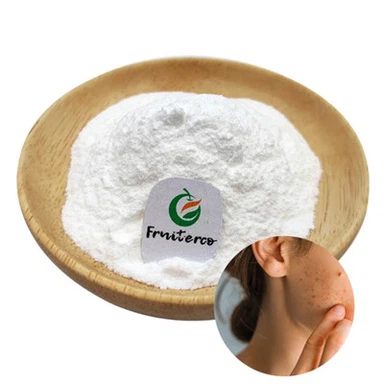
Tranexamic Acid: Medical And Cosmetic Benefits
Dec 16, 2024
What is Tranexamic acid?
Tranexamic acid was first discovered by a Japanese scientist named Utako Okamoto. It was first discovered that it has a good hemostatic effect, and its hemostatic activity is 27 times that of aminocaproic acid, a commonly used hemostatic drug at that time.
With the development of research, it was discovered that tranexamic acid can also be used in the field of cosmetics, mainly for its whitening effect. Specifically, it blocks the production of melanin, blocks the transport and transmission of melanin from melanocytes to other cells, and promotes keratinization. The layer falls off and accelerates melanin metabolism.
Features of Tranexamic Acid:
(1) Mild and non-irritating
It is mild and non-irritating, has good stability, is acid and alkali resistant, not easily affected by temperature and environment, does not require carrier protection, and is not easily affected by drug delivery systems.
(2) Easy to absorb by the skin
Tranexamic acid has a small molecular weight and is easily absorbed through the skin. It can directly reach the basal layer of the skin, inhibit the production of melanin, and achieve the goals of whitening, lightening spots, and improving skin dullness.
(3) Safety and effectiveness
Tranexamic acid is safe and non-irritating to the skin. It was developed from a hemostatic drug and has sufficient clinical research data. Its efficacy in whitening, lightening spots, preventing and treating chloasma, dark spots and freckles has been confirmed.
Benefits:
1. Stop bleeding
The use of tranexamic acid powder alone is better than the use of absorbable hemostatic gauze alone, and the local combination of absorbable hemostatic gauze and tranexamic acid has the best effect without increasing the risk of thrombotic diseases.
2. Reduce pigmentation
Tranexamic acid does not directly act on tyrosinase in black cells, but acts on keratinocytes, interfering with the structure of fibrinolytic enzyme and preventing fibrinolytic enzyme from interacting with lysine sites in keratinocytes. combined to prevent UV-induced pigmentation.

3. Anti-photoaging
Tranexamic acid can improve UVB-induced photoaging by increasing mitochondrial biogenesis and UVA-induced photoaging by increasing the expression of estrogen receptor-β on the surface of mast cells and regulating hypothalamic-pituitary hormones.
4. Prevent bleeding
In order to avoid postoperative bleeding after surgery, patients can also use tranexamic acid for treatment under the guidance of a doctor.
5. Antifibrinolysis
The chemical structure of this drug is similar to that of lysine. It is anti-fibrinolytic and can protect fibrin from being degraded and dissolved by plasmin.
6. Anti-allergic
It can reduce the production of kinins and active peptides in the body, thereby enhancing blood vessel permeability and having an anti-itching effect.
7. Tranexamic acid powder for skin
After tranexamic acid enters the skin, it can promote the production of skin collagen and have a cleaning effect on the pigment deposited on the skin.
It can also replenish skin moisture, reduce dry skin problems, repair damaged skin cells, repair skin and delay aging.
Our Advantages:
Fruiterco can provide efficient and convenient delivery methods for the products that customers need. For example: air, sea, express, you can rest assured of product quality problems during transportation.
We are tranexamic acid powder suppliers. We have professional business staff to communicate with you about your product needs and understanding. There is a professional mailbox system, you can leave a message at any time, we will reply as soon as we see it. If you have any product needs, you can leave a message at any time and we will reply as soon as we see it. Contact us for more details: Email: info@fruiterco.com.
References:
1. Taraz, Mohammad, Somayeh Niknam, and Amir Houshang Ehsani. "Tranexamic acid in treatment of melasma: A comprehensive review of clinical studies." Dermatologic therapy 30.3 (2017).
2. Tse, Tsz Wah, and Edith Hui. "Tranexamic acid: an important adjuvant in the treatment of melasma." Journal of cosmetic dermatology 12.1 (2013): 57-66.
3. Lee, Do Hyun, et al. "Reduction in facial hyperpigmentation after treatment with a combination of topical niacinamide and tranexamic acid: a randomized, double‐blind, vehicle‐controlled trial." Skin Research and Technology 20.2 (2014): 208-212.
4. Kim, S. J., et al. "Efficacy and possible mechanisms of topical tranexamic acid in melasma." Clinical and experimental dermatology 41.5 (2016): 480-485.