What Are The 10 Most Popular Cosmetic Ingredients In 2026?
Sep 20, 2026
What Are The 10 Most Popular Cosmetic Ingredients In 2026?
As information becomes increasingly transparent, consumer priorities regarding cosmetic ingredients have shifted significantly: people are no longer easily swayed by marketing narratives, evolving instead into savvy "ingredient-conscious" consumers who understand that ingredients are the key determinant of product efficacy. While short videos and livestreams constantly hype various skincare ingredients and exaggerate their benefits, one must ask: are these products truly effective, or are they merely a "tax on the gullible"-designed solely to cash in on consumers?
1. PDRN
Mechanism of Action: PDRN consists of DNA fragments extracted from salmon testes. It shares a high degree of similarity with human DNA sequences and is believed to promote cell regeneration, stimulate collagen synthesis, reduce inflammation, and provide hydration. It is primarily used in aesthetic injections, as well as in clinical applications for wound healing and anti-aging regeneration.
Actual Efficacy: When formulated as a topical serum, transdermal absorption is extremely low; therefore, injectable forms are the most commonly used and effective option.
2. Copper Peptide GHK Cu Powder
Mechanism of Action: Copper peptides are a gentle yet highly effective skincare ingredient. Their primary functions include anti-aging and anti-wrinkle benefits, intensive repair, and antioxidant-driven brightening. Highly gentle and naturally skin-friendly-especially when compared to potent actives like retinol-they cause minimal irritation and are ideal for long-term skin maintenance and anti-aging.
Actual Effectiveness: Repairing and soothing effects typically appear quickly; however, due to their gentle nature, visible improvements in wrinkle reduction and skin firming often require consistent use for at least three weeks (approximately 21 days).
3. Pyrrolidone Carboxylic Acid (Zinc PCA)
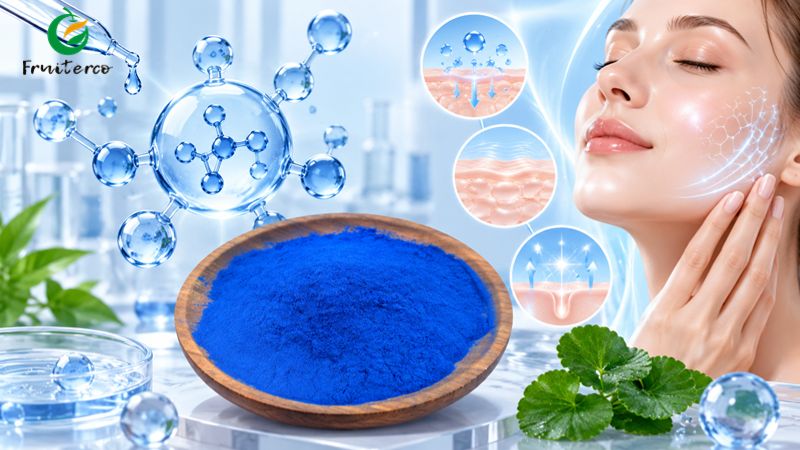
Mechanism of Action: Zinc PCA inhibits 5α-reductase activity, thereby reducing sebum secretion; it addresses the root cause of an oily complexion, helping the skin stay fresh and matte. Compared to two other major oil-control ingredients-salicylic acid (which dissolves dead skin cells) and niacinamide (which regulates sebum output)-Zinc PCA tackles the issue at the source. It only controls oil; it cannot forcibly shrink enlarged pores, and it offers only mild benefits for inflammatory acne.
Actual Results: Suitable for oily and acne-prone skin; it helps manage excessive oiliness and shiny pores, aids in improving mild inflammatory acne, and is gentle and non-irritating.
4. Ergothioneine
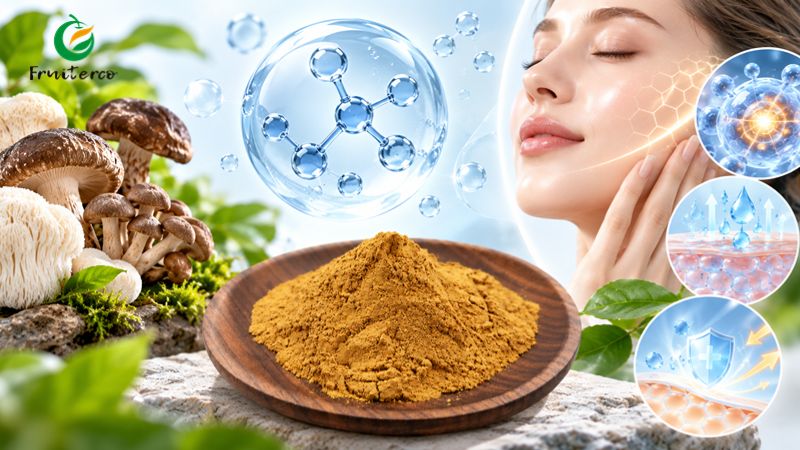
Mechanism of Action: A rare, naturally occurring amino acid that provides targeted, long-lasting antioxidant protection. Once it enters skin cells, it remains active for an extended period rather than being rapidly metabolized. Ergothioneine powder is exceptionally gentle-non-irritating, non-photosensitizing, and requiring no adjustment period-making it suitable for sensitive skin, compromised barriers, and post-procedure recovery. It is a rare, gentle anti-aging ingredient that excels at both antioxidant defense and skin repair.
Proven Benefits: Reduces sallowness and brightens the complexion (revitalizing skin dulled by lack of sleep); combats early signs of aging and diminishes dry lines and fine lines; stabilizes and repairs damaged skin barriers.
5. Ceramides
Mechanism of Action: Ceramides come in various subtypes, such as NP, AP, EOP, and NG. EOP is a type of long-chain ceramide that firmly anchors the lipid layers between corneocytes; it repairs the "brick-and-mortar" structure of the skin barrier, locks in moisture, and reduces the penetration of external irritants. The skin's natural EOP levels decline with age.
Actual Benefits: For dry, sensitive skin, compromised barriers, or seasonal flaking, long-term use reduces transepidermal water loss and alleviates dryness and sensitivity, while also helping to improve skin roughness and fine lines caused by dryness.
6. Centella Asiatica Extract
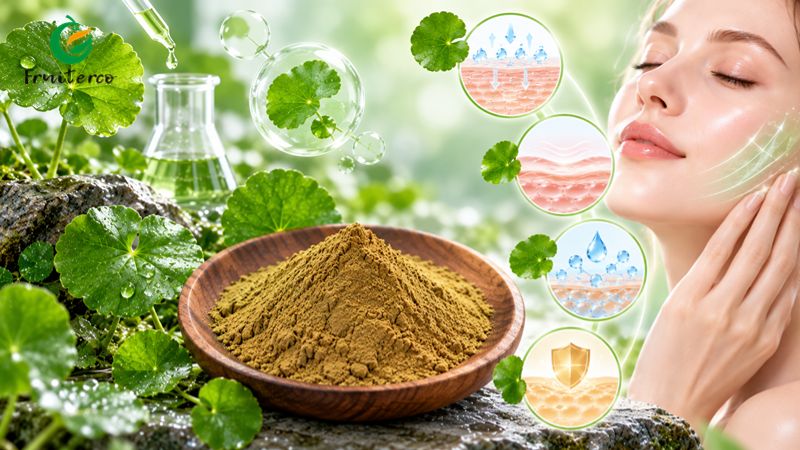
Centella asiatica extract is a natural active ingredient derived from the dried whole plant of Centella asiatica. It primarily contains triterpenoid compounds such as asiaticoside, madecassoside, asiatic acid, and madecassic acid.
7. Astaxanthin
Mechanism of Action: A potent antioxidant that scavenges free radicals and offers UV protection; however, it is highly unstable-oxidizing and losing efficacy when exposed to light or heat-and tends to cause significant staining.
Actual Effectiveness: It provides only supplementary antioxidant benefits; its skin penetration is limited, serving primarily to moisturize and provide antioxidant protection at the surface level.
Precautions: Astaxanthin loses its activity very easily; without proper formulation and packaging, it quickly becomes ineffective after the container is opened.
8. Papain
Mechanism of Action: A natural enzyme derived from papaya. It accelerates skin turnover by breaking down aged keratin proteins on the skin's surface. It acts as a gentle biological exfoliant, serving as an alternative to AHAs (alpha hydroxy acids) and salicylic acid.
Actual Efficacy: Effectively softens dead skin cells and improves rough, dull skin; it is gentler than chemical acids. However, because enzyme activity is highly sensitive to temperature and pH, the product's effectiveness can be significantly compromised if the formulation is not properly executed.
9. Sodium Hyaluronate
Mechanism of action: Sodium hyaluronate possesses powerful water-absorbing and moisturizing capabilities; its actual effects vary depending on the method of application (topical use or medical injection) and the molecular weight.
10. Pro-Xylane
Mechanism of Action: The primary function of Pro-Xylane is to stimulate the synthesis of glycosaminoglycans (GAGs) and collagen; its key benefits lie in long-term early-stage anti-aging, as well as enhancing skin plumpness and firmness.
Proven Efficacy: Long-term use improves skin elasticity and offers effective results in managing fine lines and early signs of sagging, helping to maintain firmness.
about us:
Fruiterco is an export company that mainly produces plant extracts, health product raw materials, and cosmetic raw materials. The company has a 20+ professional service after-sales team.
Our products are sold to North America, Europe, Australia, South America and Asia. Our products have passed quality inspection and also support customer re-inspection. We are a professional supplier and manufacturer of red bean powder. If you wish to buy Copper Peptide GHK Cu Powder, please contact us: Email: info@fruiterco.com.
References:
1. Altavilla D., Bitto A., Polito F., Marini H., Minutoli L., Di Stefano V., et al. (2009). Polydeoxyribonucleotide (PDRN): a safe approach to induce therapeutic angiogenesis in peripheral artery occlusive disease and in diabetic foot ulcers. Cardiovasc. Hematol. Agents Med. Chem. 7, 313–321. 10.2174/187152509789541909
2. Bitto A., Oteri G., Pisano M., Polito F., Irrera N., Minutoli L., et al. (2013). Adenosine receptor stimulation by polynucleotides (PDRN) reduces inflammation in experimental periodontitis. J. Clin. Periodontol. 40, 26–32. 10.1111/jcpe.12010
3. Alshammari N., Platts J.A. Theoretical study of copper binding to GHK peptide. Comput. Biol. Chem. 2020;86:107265. doi: 10.1016/j.compbiolchem.2020.107265.
4. Sun L.M., Li A.P., Hu Y.Z., Li Y., Shang L., Zhang L.B. Self-assembled fluorescent and antibacterial GHK-Cu nanoparticles for wound healing applications. Part. Part. Syst. Charact. 2019;36:1800420. doi: 10.1002/ppsc.201800420.
5. Shimmura S, Ono M, Shinozaki K, et al. Sodium hyaluronate eyedrops in the treatment of dry eyes. Br J Ophthalmol 1995;79:1007–11.
6. Scott IR, Harding CR, Barrett JG. Histidine-rich protein of the keratohyalin granules. Source of the free amino acids, urocanic acid and pyrrolidone carboxylic acid in the stratum corneum. Biochim Biophys Acta. 1982;719:110–117. doi: 10.1016/0304-4165(82)90314-2.
7. Borodina I, Kenny LC, McCarthy CM, Paramasivan K, Pretorius E, Roberts TJ, van der Hoek SA, Kell DB. The biology of ergothioneine, an antioxidant nutraceutical. Nutr Res Rev. 2020;33:190–217.
8. Fard SE, Tafvizi F, Torbati MB. Silver nanoparticles biosynthesised using Centella asiatica leaf extract: apoptosis induction in MCF-7 breast cancer cell line. IET Nanobiotechnol. 2018;12:994–02. doi: 10.1049/iet-nbt.2018.5069.
9. Wolf AM, Asoh S, Hiranuma H, Ohsawa I, Iio K, Satou A, Ishikura M, Ohta S. Astaxanthin protects mitochondrial redox state and functional integrity against oxidative stress. J Nutr Biochem. 2010;21:381–389. doi: 10.1016/j.jnutbio.2009.01.011.