What Other Benefits Do Cranberries Offer, Besides Supporting Women's Health?
Sep 18, 2026
what is cranberry?
The cranberry is a small, round, bright red berry characterized by a smooth skin, firm flesh, and a balanced sweet-and-sour flavor; it has a history of cultivation spanning over 200 years. Native to the United States and recognized as one of the country's three major healthy fruits, the cranberry is rich in bioactive compounds, including proanthocyanidins, anthocyanins, and phenolic acids.
Proanthocyanidins-also known as condensed tannins-are phenolic compounds and are internationally recognized as some of the most effective natural antioxidants for scavenging free radicals in the human body. With a concentration of 34.3 mg/100 g in fresh fruit, they are the primary bioactive substances found in cranberries. Unlike other berries, the proanthocyanidins in cranberries are specifically of the PAC type, which possess anti-bacterial adhesion properties.
Quercetin is the principal flavonoid in cranberries, present at a level of 25 mg/100 g. It exhibits excellent antioxidant activity and inhibits the initial oxidation of low-density lipoprotein (LDL) cholesterol; this action lowers blood triglyceride levels, thereby promoting cardiovascular health.
In addition, cranberries contain other bioactive components such as resveratrol, lignans, pectin, ellagic acid, ursolic acid, and tocotrienols, all of which offer potential nutritional value and health-promoting benefits.
What Are The Benefits Of Cranberries For Women's Health?
Urinary tract infections (UTIs) are the most common outpatient infections in the United States, accounting for approximately 10.5 million physician visits annually-a rate that continues to rise. In 2019, there were approximately 400 million UTI cases worldwide, resulting in 236,800 deaths. Women have an age-standardized incidence rate 3.6 times higher than that of men, making them a key target population for UTI prevention and control.
UTIs are predominantly bacterial in origin and often require prolonged or repeated courses of antibiotics, exacerbating the problem of antibiotic resistance and leading to other adverse effects associated with long-term antibiotic use. Consequently, cranberries-a natural plant-have garnered increasing attention for their potential to alleviate UTIs.
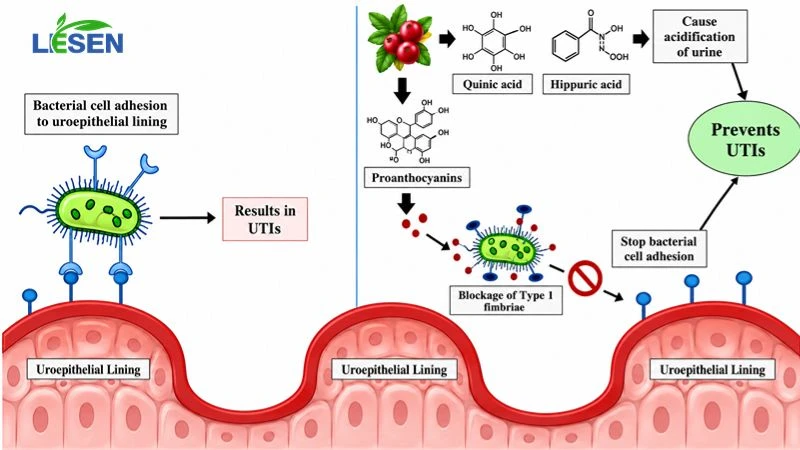
A review article published in *Frontiers in Nutrition* in February 2025 provides a comprehensive analysis of literature spanning 1962 to 2024 regarding the role of cranberry metabolites in UTI prevention. The review indicates that cranberry metabolites-specifically A-type proanthocyanidins (PACs), flavonoids, and phenolic acids-inhibit the adhesion of Escherichia coli to urothelial cells, thereby reducing UTI recurrence.
Anti-adhesion activity, antimicrobial properties, and antioxidant and anti-inflammatory effects are key factors in the ability of cranberries to prevent or mitigate UTIs.
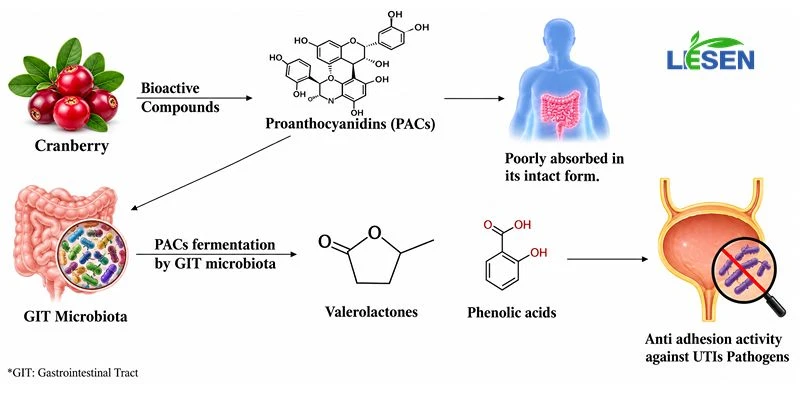
Microbial metabolism is an essential step in the prevention of UTIs by cranberry proanthocyanidins (PACs), a process in which the gut microbiota plays a key role. Cranberry PACs-particularly those with A-type linkages-are poorly absorbed in their intact form. Gut microbiota metabolize them into low-molecular-weight metabolites (such as lactones and phenolic acids) that exhibit anti-adhesive bioactivity in urine, thereby effectively alleviating UTIs.
What are the other benefits of cranberries?
1. Alleviation of Gynecological Conditions
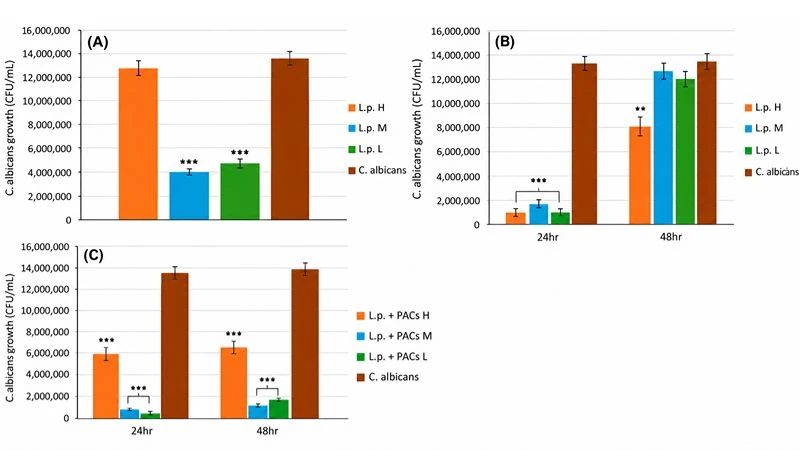
Vulvovaginal candidiasis (VVC) is a common gynecological condition primarily caused by Candida albicans. The overuse of antifungal drugs leads to increased drug resistance, necessitating the search for alternative therapies. Experimental results demonstrate that PACs can significantly inhibit the activity of *Candida albicans* within 48 hours, with an even stronger inhibitory effect observed when PACs are used in combination with Lactobacillus plantarum.
2. Maintaining Vaginal Health
Research indicates that cranberry oil can reduce inflammation (a 33% decrease in IL-8 and a 32% decrease in TNF-α) and oxidative stress (a 43% reduction in ROS) in epithelial cells and tissues-including the vaginal epithelium-as well as alleviate SDS-induced skin irritation.
Furthermore, cranberry oil effectively inhibits the concentration of pathogenic vaginal microorganisms and helps balance gut microbiota. Given these nutritional benefits, cranberry oil holds great potential as an ingredient in intimate care products.
3. Delaying Aging
Aging involves a progressive decline in physiological functions over time and is closely linked to oxidative stress and telomere shortening. Studies show that cranberry extract can help delay aging by regulating the body's redox status and protecting telomeres.
Compared to grape seed extract-widely recognized by consumers for its anti-aging properties-cranberry extract demonstrates superior efficacy in modulating glutathione peroxidase activity and protecting telomeres, making it a highly promising functional food ingredient for anti-aging applications.
What is the difference between cranberry powder and cranberry extract?
Cranberry powder is typically a physical product made by directly drying (via spray drying, hot-air drying, or freeze-drying) and pulverizing fresh cranberries. In contrast, cranberry extract is produced from the fruit through a complex series of processes-such as water or ethanol extraction, macroporous resin adsorption, ultrafiltration, concentration, and drying-specifically designed to enrich key active ingredients like anthocyanins and proanthocyanidins.
| Contrast | Cranberry powder | Cranberry extract |
| Key ingredients | Vitamin C, sugars, dietary fiber, organic acids, and small amounts of anthocyanins. | High concentrations of proanthocyanidins (especially A-type), anthocyanins, and flavonols. |
|
Appearance |
Light red to dark red powder |
Deep purplish-red fine powder |
| Specification | It has a sweet-and-sour fruity aroma, good water solubility. | Available in various specifications, such as 25% |
| Benefits | Antioxidant, promotes intestinal motility, and imparts natural flavor. | Potently scavenges free radicals, prevents urinary tract infections, and protects cardiovascular health. |
|
Uses |
Food & Beverage, Bakery, Confectionery, Pet Nutritional Supplements | Pharmaceutical raw materials, health supplements, high-end cosmetics, and functional solid beverages. |
about us:
Fruiterco is an export company that mainly produces plant extracts, health product raw materials, and cosmetic raw materials. The company has a 20+ professional service after-sales team.
Our products are sold to North America, Europe, Australia, South America and Asia. Our products have passed quality inspection and also support customer re-inspection. We are a professional supplier and manufacturer of red bean powder. If you wish to buy cranberry powder, please contact us: Email: info@fruiterco.com.
References:
1. JANGID H, SHIDIKI A, KUMAR G. Cranberry-derived bioactives for the prevention and treatment of urinary tract infections: antimicrobial mechanisms and global research trends in nutraceutical applications [J]. Frontiers in Nutrition, 2025, 12.
2. WU Y-R, CHEN J-S, CHEN L-C, et al. Synergistic Inhibition of Candida albicans by Cranberry Proanthocyanidins and Probiotics: Novel Strategies for Vulvovaginal Candidiasis Treatment [J]. Pathogens, 2025, 14(4).
3. Boira, C., Jolibois, J., Durduret, A., Tiguemounine, J., Szewezyk, C., De Tollenaere, M., .Reynaud, R. (2025). Cranberry oil: A potent natural intimate care ingredient displaying antioxidant and anti-inflammatory effects and promoting beneficial vaginal lactobacillus. International Journal of Molecular Sciences, 26(5), 2176.
4. Kaspar KL, Howell AB, Khoo C. A randomized, double-blind, placebo-controlled trial to assess the bacterial anti-adhesion effects of cranberry extract beverages. Food Funct 2015;6:1212–7.
5. LaPlante KL, Sarkisian SA, Woodmansee S, Rowley DC, Seeram NP. Effects of cranberry extracts on growth and biofilm production of Escherichia coli and Staphylococcus species. Phytother Res 2012;26:1371–4.
6. Lee IT, Chan YC, Lin CW, Lee WJ, Sheu WH-H. Effect of cranberry extracts on lipid profiles in subjects with type 2 diabetes. Diabet Med 2008;25:1473–7.
7. Anhê FF, Roy D, Pilon G, Dudonné S, Matamoros S, Varin T, Garofalo C, Moine Q, Desjardins Y, Levy E, et al. A polyphenol-rich cranberry extract protects from diet-induced obesity, insulin resistance and intestinal inflammation in association with increased Akkermansia spp. population in the gut microbiota of mice. Gut 2015;64:872–83.