

Acetyl Tetrapeptide-2: Benefits, Mechanism, Applications And Cosmetic Ingredient Guide
Sep 23, 2026
What Is Acetyl Tetrapeptide-2?
Acetyl Tetrapeptide-2 is a synthetic cosmetic peptide used in anti-aging, skin-firming and advanced skincare formulations. Also known as Acetyl Tetrapeptide-2, this short peptide is commonly identified by the sequence Ac-Lys-Asp-Val-Tyr (Ac-KDVY) and CAS No. 757942-88-4. It has a molecular formula of C₂₆H₃₉N₅O₉ and a molecular weight of approximately 565.62 g/mol.
In cosmetic ingredient research, Acetyl Tetrapeptide-2 is particularly associated with skin firmness, extracellular matrix support, collagen and elastin-related pathways, and facial contour care. Research has investigated its effects on structural skin proteins and cell-matrix interactions, while more recent cosmetic literature continues to examine peptide-based approaches to skin aging.
For cosmetic brands, formulators, OEM/ODM manufacturers and raw-material distributors, Acetyl Tetrapeptide-2 provides an interesting peptide option for developing premium firming, lifting and anti-aging skincare products.
Acetyl Tetrapeptide-2 at a Glance:
| Property | Information |
|---|---|
| Product Name | Acetyl Tetrapeptide-2 Powder |
| INCI Name | Acetyl Tetrapeptide-2 |
| Common Peptide Sequence | Ac-Lys-Asp-Val-Tyr (Ac-KDVY) |
| CAS No. | 757942-88-4 |
| Molecular Formula | C₂₆H₃₉N₅O₉ |
| Molecular Weight | 565.6 g/mol |
| Appearance | White Powder |
| Purity Specification | ≥98% by HPLC |
| Grade | Cosmetic Grade |
| Main Cosmetic Positioning | Anti-aging, firming, lifting, skin-conditioning |
| Typical Product Applications | Serums, creams, eye care, body care and other cosmetic formulations |
| Shelf Life | 2 years |
| Commercial Packaging | 1 kg/bag, 25 kg/drum |
The commercial specifications above are based on the Fruiterco product listing. Buyers should confirm the exact specifications, storage requirements and batch-specific COA before production.
What Does Acetyl Tetrapeptide-2 Do?
The main cosmetic applications of Acetyl Tetrapeptide-2 can be summarized as:
- Skin firming
- Anti-aging skincare
- Fine-line and wrinkle care
- Skin-conditioning
- Facial contour care
- Collagen and elastin-related formulation concepts
- Body-firming formulations
Research and technical literature have investigated Acetyl Tetrapeptide-2 powder in relation to collagen and elastin production, cell adhesion and structural skin organization. MedChemExpress, for example, reports in-vitro studies in HaCaT cells involving cellular cohesion, focal adhesion-related genes and production of collagen type I and elastin.
These findings are useful for understanding the ingredient's research direction, but in-vitro findings should not automatically be interpreted as equivalent to demonstrated clinical effects in human skin.
For responsible B2B marketing, it is therefore more appropriate to describe Acetyl Tetrapeptide-2 as a peptide studied for skin-firming and extracellular-matrix-related cosmetic applications.
How Does Acetyl Tetrapeptide-2 Work?
1. Support for Structural Skin Proteins
One of the main research directions for Acetyl Tetrapeptide-2 involves structural proteins such as collagen and elastin. Collagen contributes to the strength and structural integrity of skin, while elastin contributes to elasticity and resilience.
Changes in these structural systems are closely associated with visible skin aging. Experimental data reported for Acetyl Tetrapeptide-2 have investigated its relationship with collagen type I and elastin production in skin-related cell models. This provides a scientific basis for positioning the ingredient within firming and anti-aging cosmetic formulations.
2. Extracellular Matrix and Cell-Matrix Interaction
The extracellular matrix, or ECM, is a complex network surrounding cells that contributes to tissue structure and function. Recent research on bioactive peptide matrikines highlights the broader importance of peptide-mediated regulation of extracellular matrix remodeling in skin rejuvenation research.
Acetyl Tetrapeptide-2 has also been studied in relation to cell adhesion and matrix-associated processes. This makes it particularly relevant to formulations designed around skin architecture, firmness and structural support.
3. Fibulin-5 and LOXL1-Related Research
Some cosmetic ingredient research has investigated Acetyl Tetrapeptide-2 in relation to FBLN5 (fibulin-5) and LOXL1 (lysyl oxidase-like 1), proteins associated with elastic-fiber organization. Fibulin-5 and LOXL1 are relevant to the organization and maturation of elastic fibers.
The proposed connection between Acetyl Tetrapeptide-2 and these pathways has contributed to its cosmetic positioning around firmness, elasticity and facial contour support. However, pathway-level findings should be distinguished from direct evidence of visible lifting or contour improvement in human subjects.
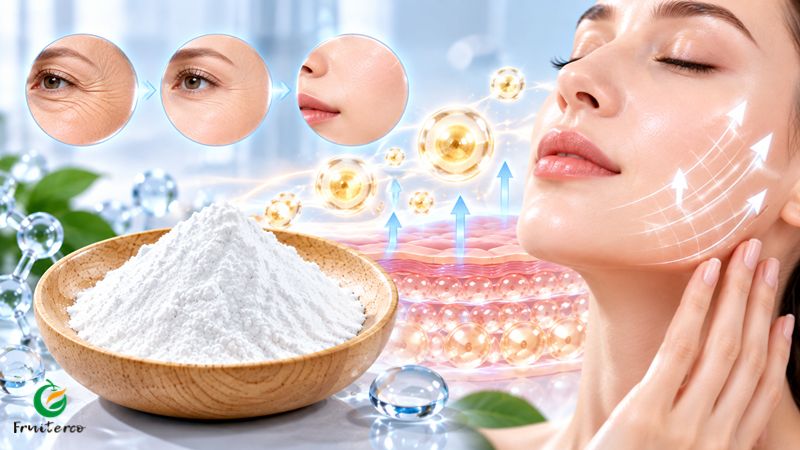
Acetyl Tetrapeptide-2 Benefits for Cosmetic Formulation:
1. Skin-Firming Formulations
Firmness is one of the clearest commercial positioning opportunities for Acetyl Tetrapeptide-2. Aging skin can experience changes in collagen, elastin and extracellular matrix organization. Acetyl Tetrapeptide-2 offers formulators a peptide-based approach for products designed around firmness and skin structure. It can therefore be incorporated into:
- Firming serums
- Anti-aging creams
- Facial concentrates
- Eye-care products
- Neck-care products
- Body-firming products
2. Anti-Aging Skincare
Acetyl Tetrapeptide-2 fits naturally into premium anti-aging product concepts. Rather than relying solely on hydration, a peptide-based anti-aging formula can combine: Firming peptides + moisturizing agents + antioxidants + barrier-support ingredients. This allows brands to develop a more comprehensive approach to mature-skin care.
3. Fine-Line and Wrinkle Care
Changes in collagen and elastin are associated with visible fine lines and wrinkles. Because Acetyl Tetrapeptide-2 has been investigated in relation to structural skin proteins, it can be used as part of an ingredient story focused on the appearance of fine lines and age-related skin changes. Marketing claims should be based on the finished formulation's substantiation rather than on the raw ingredient alone.
4. Skin-Conditioning Applications
Beyond anti-aging positioning, Acetyl Tetrapeptide-2 can be included in formulations designed to improve the overall appearance and feel of mature or stressed skin. This makes the ingredient suitable for premium daily skincare products where multiple benefits are combined.
5. Facial Contour and Body-Firming Concepts
Firmness is not limited to facial skincare. Body-care brands can also use peptide technology in products positioned around:
- Body firmness
- Post-weight-change skincare
- Neck and décolleté care
- Mature-body skin care
- Skin-conditioning products
Acetyl Tetrapeptide-2 Cosmetic Applications:
1. Anti-Aging Serum
Acetyl Tetrapeptide-2 is well suited to premium serum concepts because peptides can serve as hero ingredients in concentrated anti-aging formulations. A serum may combine Acetyl Tetrapeptide-2 with:
- Hyaluronic acid
- Other peptides
- Niacinamide
- Antioxidants
- Ceramides
- Panthenol
- Skin-conditioning ingredients
The final combination should be selected according to the desired formulation properties and stability profile.
2. Firming Face Cream
Face creams provide a convenient format for long-term daily skincare. Acetyl Tetrapeptide-2 can be positioned as the peptide component of a firming cream designed for mature skin. Possible marketing concepts include:
- Advanced Peptide Firming Cream
- Skin-Firming Anti-Aging Cream
- Peptide Facial Contour Care
3. Eye Cream
The eye area is an important market for anti-aging peptides. Acetyl Tetrapeptide-2 can be evaluated in eye creams and eye serums targeting the appearance of fine lines and loss of firmness. Because the eye area is sensitive, the finished formula requires appropriate safety and compatibility assessment.
4. Neck and Décolleté Care
Neck-care products have become an increasingly visible part of premium anti-aging skincare. A peptide such as Acetyl Tetrapeptide-2 can support a formulation concept focused on: Firmness + elasticity + mature-skin care
5. Body-Firming Products
Acetyl Tetrapeptide-2 can also be considered for body lotions, creams and concentrates designed around skin firmness. This creates additional opportunities for brands that want to extend peptide technology beyond facial skincare.
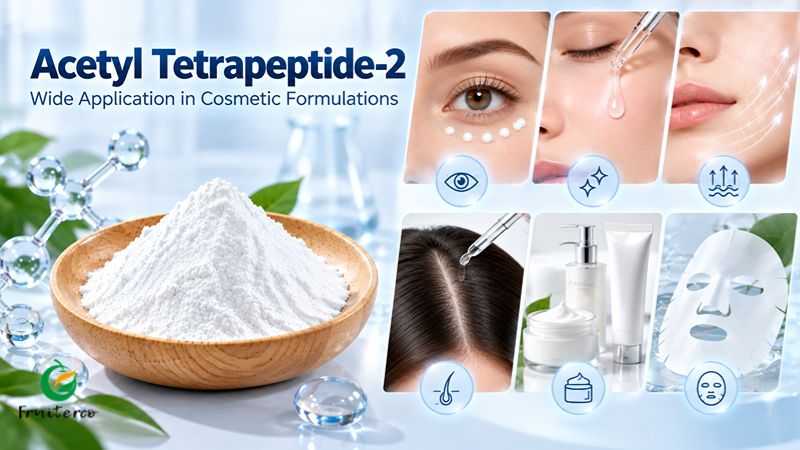
Acetyl Tetrapeptide-2 vs. Other Anti-Aging Peptides:
Different cosmetic peptides can target different biological pathways.
| Peptide Category | Typical Research Direction | Cosmetic Positioning |
|---|---|---|
| Acetyl Tetrapeptide-2 | Structural skin proteins / ECM-related pathways | Firming and anti-aging |
| Matrixyl-type peptides | Extracellular matrix and collagen-related pathways | Wrinkle and skin rejuvenation |
| Copper peptides | Wound-healing/ECM-related research | Skin conditioning and anti-aging |
| Neurotransmitter-related peptides | Neuromuscular signaling | Expression-line care |
| Barrier-support peptides | Skin barrier and conditioning | Dry/mature skin care |
The purpose of this comparison is not to establish that one peptide is universally superior. Instead, it illustrates why mechanism and formulation objectives should guide peptide selection.
For example, a brand developing an expression-line product may select a neurotransmitter-related peptide, while a brand developing a firming product may prefer a peptide associated with structural skin pathways.
Why Source Acetyl Tetrapeptide-2 from Fruiterco?
For international cosmetic ingredient buyers, sourcing involves more than price. Important evaluation factors include:
1. Analytical Quality
Fruiterco lists ≥98% HPLC purity for its Acetyl Tetrapeptide-2 Powder and provides sample quality-control data.
2. B2B Packaging
The product is listed in 1 kg/bag and 25 kg/drum packaging formats, allowing the material to serve both formulation development and larger purchasing requirements.
3. International Supply
Fruiterco states that its products are supplied to customers in North America, Europe, Australia, South America and Asia and that customers can arrange independent re-testing.
4. Documentation and Quality Support
For cosmetic raw-material procurement, buyers can request relevant technical and quality documents, including the batch COA and other applicable documentation.
5. Multi-Market Ingredient Portfolio
Fruiterco's cosmetics ingredient category includes a range of peptide and functional cosmetic raw materials, making it possible for brands and formulation companies to evaluate Acetyl Tetrapeptide-2 alongside other peptide ingredients.
Latest Research and Evidence on Acetyl Tetrapeptide-2
The scientific context surrounding cosmetic peptides continues to evolve.
A 2025 review in the American Journal of Physiology-Cell Physiology examined bioactive peptide matrikines and their potential roles in skin rejuvenation, emphasizing the relationship between extracellular matrix remodeling and skin aging.
For Acetyl Tetrapeptide-2 specifically, available technical and experimental sources describe research involving collagen, elastin, cell adhesion and structural skin pathways.
At the same time, the independent evidence base for individual cosmetic peptides can vary considerably. Therefore, it is important to distinguish between:
- Ingredient-level mechanistic research
- Cell-culture studies
- Supplier-sponsored testing
- Human clinical studies
- Finished-formula efficacy testing
Evidence from one category should not automatically be treated as evidence from another. For brands developing commercial skincare products, the most useful next step is usually finished-formula substantiation, rather than relying exclusively on raw-material literature.
Acetyl Tetrapeptide-2 FAQ:
Q1. What is Acetyl Tetrapeptide-2?
Acetyl Tetrapeptide-2 is a synthetic acetylated tetrapeptide used as a cosmetic active ingredient, particularly in anti-aging, firming and skin-conditioning formulations.
Q2. What is the CAS number and molecular weight of Acetyl Tetrapeptide-2?
The commonly listed CAS number is 757942-88-4. Its reported molecular weight is approximately 565.62 g/mol.
Q3. What is the sequence of Acetyl Tetrapeptide-2?
The commonly reported sequence is Ac-Lys-Asp-Val-Tyr (Ac-KDVY).
Q4. What is Acetyl Tetrapeptide-2 used for?
It is primarily used in cosmetic formulations focused on anti-aging, firmness, elasticity, skin conditioning and the appearance of fine lines and wrinkles.
Q5. Does Acetyl Tetrapeptide-2 stimulate collagen?
Experimental research has investigated its effects on collagen-related markers and collagen type I production in cell models. However, cell-based results should not automatically be interpreted as proof of a clinical collagen-increasing effect in humans.
Q6. Does Acetyl Tetrapeptide-2 support elastin?
Research and technical literature have investigated Acetyl Tetrapeptide-2 in relation to elastin and elastic-fiber-related pathways. These findings contribute to its cosmetic positioning around firmness and elasticity.
Q7. Is Acetyl Tetrapeptide-2 suitable for anti-aging serums?
Yes. It can be considered for anti-aging serums and other leave-on cosmetic formulations, subject to formulation compatibility, stability and finished-product safety assessment.
Q8. Can Acetyl Tetrapeptide-2 be used in eye creams?
It can be evaluated for eye-care formulations targeting the appearance of fine lines and loss of firmness. The complete finished formulation must be assessed for eye-area suitability.
Q9. Can Acetyl Tetrapeptide-2 be used in body-care products?
Yes. It can be incorporated into body-firming and skin-conditioning concepts, including products designed for mature or lax-looking skin.
Q10. Is Acetyl Tetrapeptide-2 a finished cosmetic?
No. Acetyl Tetrapeptide-2 Powder is a cosmetic raw material/active ingredient intended for formulation into finished products.
Q11. What packaging is available?
Fruiterco lists 1 kg/bag and 25 kg/drum packaging.
Q12. Is Acetyl Tetrapeptide-2 the same as Acetyl Tetrapeptide-9?
No. They are different peptide ingredients with different amino-acid sequences and cosmetic research profiles.
Q13. Can Acetyl Tetrapeptide-2 be combined with other peptides?
It can be evaluated in multi-peptide formulations. Combining peptides with different research mechanisms can allow formulators to develop broader anti-aging and firming concepts, but compatibility and stability should be validated experimentally.
References:
1. PubChem. Acetyl tetrapeptide-2, CID 91936905. National Library of Medicine.
2. MedChemExpress. Acetyl tetrapeptide-2 | Anti-aging Peptide. Chemical and in-vitro research information.
3. Birtles T, et al. Bioactive peptide matrikines: discovery approaches for skin rejuvenation. American Journal of Physiology-Cell Physiology, 2025.
4. Aladdin Scientific. Acetyl Tetrapeptide-2 and Elastic Fiber Formation: Research on Fibulin-5, LOXL1, and Skin Firmness. 2026.


